
Introduction
If you’re looking for a vibrant, nutritious meal that’s quick to prepare, then this Easy Vegan Bibimbap Recipe is perfect for you. This traditional Korean bowl is not just a feast for the eyes but also packed with flavors and health benefits. Imagine a warm bowl filled with perfectly cooked rice, topped with sautéed vegetables, and a hint of spicy gochujang that awakens your taste buds.
Bibimbap is a wonderful dish that allows for creativity and personalization. Whether you’re a seasoned cook or a busy professional, this recipe can be your go-to for a satisfying meal that fits into a hectic schedule. It’s an excellent way to use up any vegetables you have on hand, making it both a nutritious and sustainable choice. Plus, who doesn’t love a meal that can be made in just 30 minutes?
The combination of fresh ingredients, like crisp zucchini and tender spinach, creates a delightful texture that complements the chewy rice and protein-rich tofu. Not to mention, the addition of sesame oil adds a nutty aroma that rounds out the dish beautifully. As you dive into this colorful bowl, you’ll appreciate the perfect harmony of flavors and the ease of preparation, making it a delightful option for any weeknight dinner or weekend gathering.
Key Ingredients
In this Easy Vegan Bibimbap Recipe, each ingredient plays a vital role in creating a delicious and nutritious meal. Here’s a closer look at the key components that make this dish shine:
Cooked Rice (1 cup)
The foundation of your bibimbap, cooked rice provides a comforting base that soaks up the flavors of the toppings. You can use brown rice for added fiber and nutrients, or stick with white rice for a classic texture.
Spinach (1 cup, sautéed)
Sautéed spinach adds vibrant color and a rich source of vitamins. This leafy green not only enhances the dish’s nutritional profile but also brings a delightful softness that balances the crunch of the other vegetables.
Zucchini (1 cup, julienned)
Julienned zucchini contributes a mild, slightly sweet flavor and a pleasing crunch. It cooks quickly, making it a perfect addition to this fast-paced recipe.
Carrots (1 cup, julienned)
With their bright orange hue, julienned carrots add both color and sweetness to the bibimbap. They are a great source of beta-carotene and add a satisfying crunch when lightly sautéed.
Bean Sprouts (1 cup, blanched)
Blanched bean sprouts introduce a refreshing crunch and enhance the overall texture of the dish. They’re low in calories but high in vitamins, making them a fantastic addition to any meal.
Sesame Oil (1 tablespoon)
A drizzle of sesame oil at the end elevates the dish with its rich, nutty flavor. It’s a staple in Korean cooking, helping to tie all the ingredients together.
Gochujang (2 tablespoons)
This spicy fermented chili paste is the heart of bibimbap, giving it that signature kick. Gochujang is rich in umami, making it an essential component for flavor depth.
Tofu (1/2 cup, cubed and sautéed)
Sautéed tofu adds protein and a satisfying texture to the bowl. It’s a versatile ingredient that absorbs the flavors of the marinade or sauce you choose to use.
Fried Egg (1, optional for non-vegan)
For those who aren’t strictly vegan, a fried egg on top creates a creamy richness that complements the other ingredients beautifully. It’s a traditional finishing touch that adds extra protein.
By combining these key ingredients, you’ll create a colorful and flavorful Easy Vegan Bibimbap that’s not only visually appealing but also packed with nutrients and taste.

Why You’ll Love This Recipe
If you’re searching for a meal that is not only quick to prepare but also bursting with flavor, this Easy Vegan Bibimbap Recipe is sure to become a favorite. Packed with colorful vegetables and wholesome ingredients, this Korean bowl is a delightful way to enjoy a nutritious diet without sacrificing taste or variety.
One of the greatest things about this recipe is its versatility. You can easily customize it with seasonal vegetables or whatever you have on hand, making it a fantastic option for clean-out-the-fridge nights. Plus, the combination of textures—from the tender sautéed spinach to the crunchy carrots—makes each bite an enjoyable experience.
This bibimbap is also perfect for busy young professionals who want a homemade meal without spending hours in the kitchen. With a total prep and cook time of just 30 minutes, you can whip up this delicious bowl after a long day, giving you a satisfying and healthy dinner option that doesn’t compromise on flavor.
Whether you’re a seasoned vegan or simply looking to incorporate more plant-based meals into your diet, this bibimbap offers a wonderful way to nourish your body and satisfy your taste buds. It’s a dish that brings together the rich culinary traditions of Korea with modern, health-conscious eating, making it a must-try for anyone who loves good food.
Variations
Bibimbap is incredibly versatile, allowing you to tailor it to your taste preferences and dietary needs. Here are some variations to consider when making your Easy Vegan Bibimbap Recipe.
Seasonal Vegetables
Using seasonal vegetables can elevate your bibimbap. In the spring, consider adding asparagus or radishes for a fresh crunch. In the fall, sweet potatoes or roasted Brussels sprouts can bring warmth and heartiness to the dish.
Protein Alternatives
If you want to switch things up, try different protein sources. Tempeh makes a great alternative to tofu, providing a firmer texture and a nutty flavor. For a unique twist, consider adding edamame or chickpeas for added protein and fiber.
Flavor Enhancements
To take your bibimbap to the next level, experiment with flavor enhancements. A sprinkle of toasted sesame seeds or chopped green onions can add extra crunch and freshness. You might also try adding a drizzle of tahini for a creamy texture or a splash of rice vinegar for a tangy kick.
Spice Levels
Adjust the heat to your liking by varying the amount of gochujang. If you prefer a milder dish, start with one tablespoon and add more to taste. Alternatively, for those who love spice, consider adding a sprinkle of red pepper flakes or a dash of sriracha for an extra kick.
These variations offer endless possibilities to enjoy your bibimbap, making it a dish you can return to again and again without getting bored.
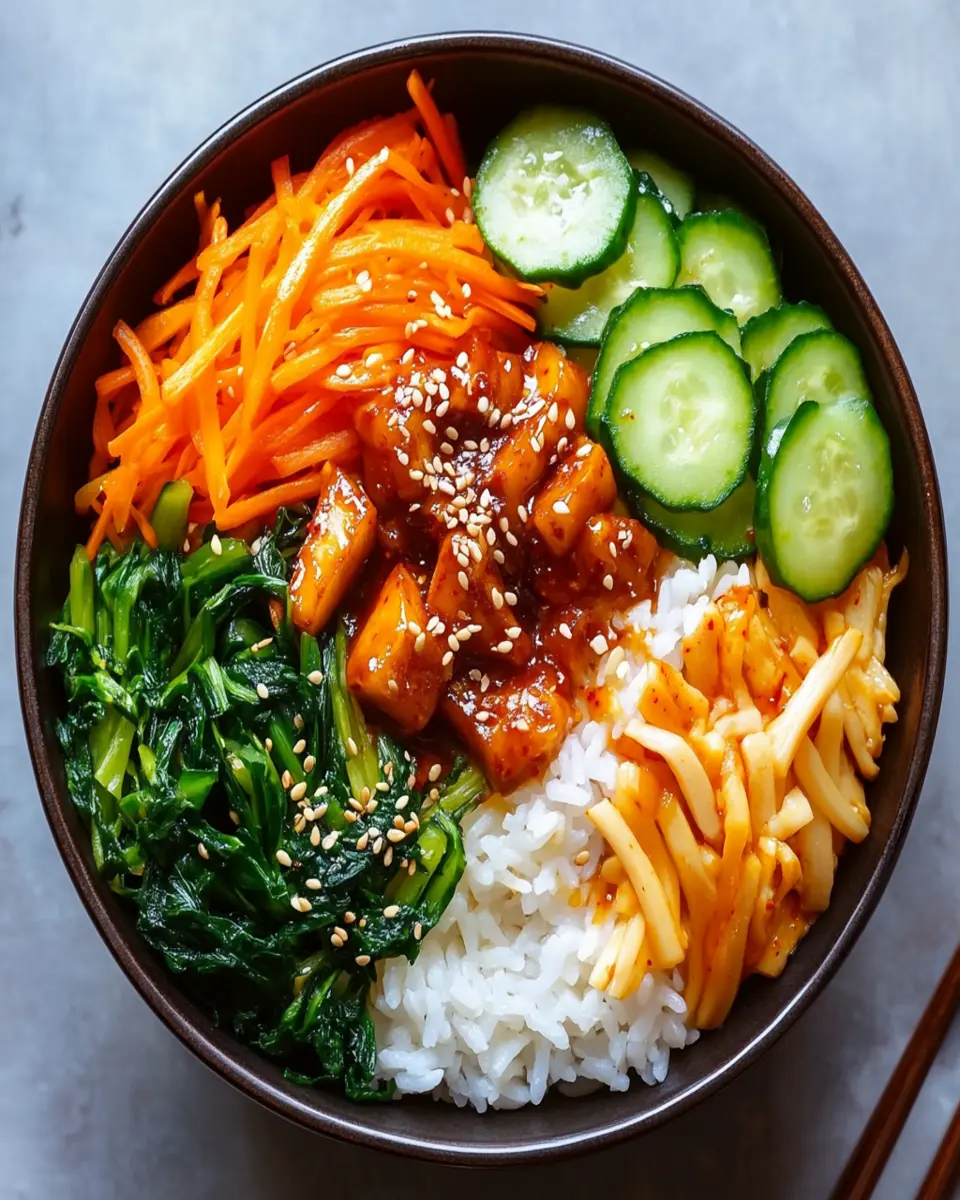
Cooking Tips and Notes
Cooking bibimbap is as much about technique as it is about the ingredients. Here are some tips to ensure your Easy Vegan Bibimbap Recipe turns out perfectly every time.
Rice Preparation
The foundation of any great bibimbap is the rice. For the best texture, use short-grain rice, which becomes sticky and easy to mix with the toppings. Rinse the rice thoroughly before cooking to remove excess starch, and consider cooking it in vegetable broth for an added depth of flavor.
Vegetable Cooking
When sautéing the vegetables, cook them individually to maintain their distinct textures and flavors. Start with the heartier vegetables like carrots and zucchini, and finish with the more delicate spinach and bean sprouts. This way, each ingredient retains its unique taste and crunch.
Tofu Tips
For even more flavor, marinate the tofu in a mix of soy sauce, garlic, and ginger before sautéing. This simple step can significantly enhance the taste of the tofu, making it a delightful addition to your bibimbap. If you prefer a crispy texture, pan-fry the tofu until golden brown.
Serving Suggestions
To serve, layer the rice in a bowl and arrange the vegetables and tofu on top in a visually appealing way. Drizzle with sesame oil and gochujang just before enjoying, and encourage diners to mix everything together for a burst of flavors in every bite.
These cooking tips will help you create a delicious and well-balanced Easy Vegan Bibimbap that you’ll want to make again and again.
Serving Suggestions
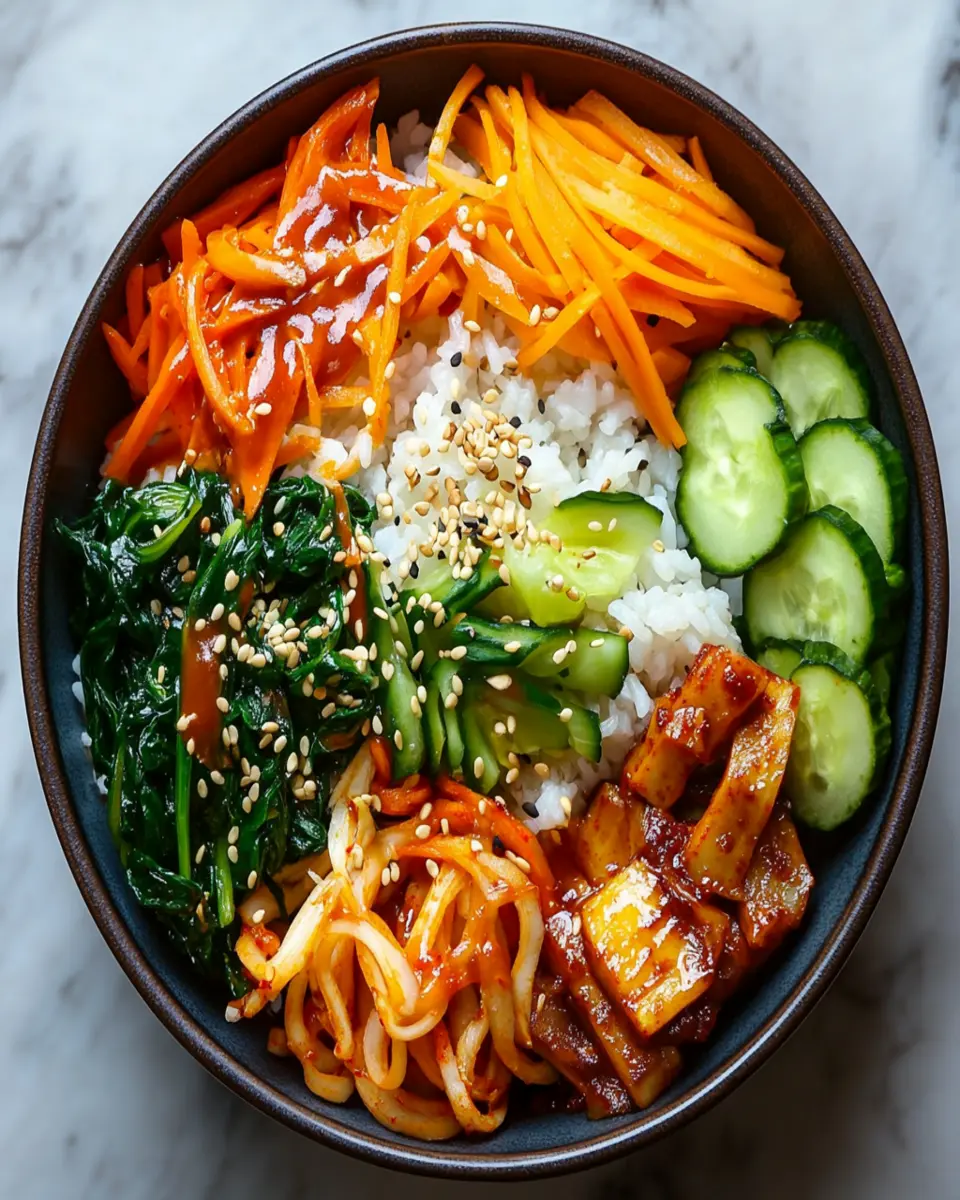
To truly enjoy your Easy Vegan Bibimbap Recipe, presentation is key. Start by layering the cooked rice at the bottom of a vibrant bowl, allowing the colorful vegetables and tofu to shine atop the rice. Arrange the sautéed spinach, julienned zucchini, and carrots in sections for an appealing and artistic look. The blanched bean sprouts can be added for a refreshing crunch, while the tofu can be placed prominently for protein.
Don’t forget to top it off with a fried egg if you’re not strictly vegan, as this adds a creamy richness that complements the dish beautifully. Just before serving, drizzle sesame oil and gochujang over the top. This will not only enhance the flavors but also create a lovely visual contrast. Encourage diners to mix everything together, allowing the various textures and flavors to meld in each delicious bite.
For an extra touch, consider serving your bibimbap with a side of kimchi or pickled vegetables, which adds a tangy kick and enhances the overall dining experience. Enjoy this colorful, nutritious bowl that’s perfect for any meal!
Time Breakdown
To prepare this Easy Vegan Bibimbap Recipe efficiently, here’s a quick breakdown of the time involved in each step.
Preparation
Spend about 15 minutes gathering and prepping your ingredients, including washing and cutting vegetables, and marinating the tofu if desired.
Cooking
Allocate another 15 minutes for cooking. This includes preparing the rice, sautéing the vegetables, and frying the tofu.
Total
In just 30 minutes, you can have a delicious and nutritious meal ready to serve. This makes it a perfect option for time-pressed individuals looking to enjoy a homemade dish without a long cooking time.
Nutritional Facts
Understanding the nutritional profile of your Easy Vegan Bibimbap Recipe is essential for healthy eating. Each serving contains approximately 450 calories, making it a satisfying meal option without being overly indulgent. Packed with 12 grams of protein from sources like tofu and a variety of vegetables, this bowl ensures you get a good balance of nutrients.
The dish has 15 grams of fat, primarily from healthy sources like sesame oil, which contributes to heart health. With 65 grams of carbohydrates and 5 grams of fiber, it provides sustained energy while supporting digestive health. This bibimbap is low in sugar, with only 3 grams per serving, making it a great choice for those monitoring their sugar intake. Additionally, it is cholesterol-free, making it suitable for a vegan diet. Embrace this colorful bowl as a delicious way to fuel your body with wholesome ingredients!
FAQ based on “People Also Ask” section
What is bibimbap?
Bibimbap is a traditional Korean dish that translates to “mixed rice.” It typically consists of a bowl of rice topped with various sautéed vegetables, protein, and a flavorful sauce. The dish is known for its vibrant colors and can be customized with different ingredients based on personal preferences.
Is bibimbap vegan?
Yes, bibimbap can easily be made vegan by using plant-based ingredients. This Easy Vegan Bibimbap Recipe features cooked rice, sautéed vegetables, and tofu, making it a wholesome option for those following a vegan diet. Just be sure to skip the fried egg if you want to keep it completely plant-based.
How can I customize my bibimbap?
One of the best things about bibimbap is its versatility. You can customize your bowl by adding seasonal vegetables, changing the protein source, or adjusting the level of spiciness with gochujang. Feel free to experiment with different toppings to suit your taste!
Can I make bibimbap ahead of time?
Absolutely! You can prepare the vegetables and rice ahead of time and store them in the refrigerator. When you’re ready to eat, simply reheat and assemble your bibimbap for a quick and nutritious meal. This makes it a great option for meal prepping!
Conclusion
In conclusion, this Easy Vegan Bibimbap Recipe offers a delightful blend of flavors and nutrients, making it a fantastic choice for any meal. Not only is it quick to prepare, but it also allows for endless customization based on your preferences and seasonal ingredients. Enjoy the vibrant colors and wholesome tastes of this delicious Korean bowl, and don’t hesitate to share your creations with friends and family. Happy cooking!
Print
Easy Vegan Bibimbap Recipe – Delicious Korean Bowl
- Total Time: 30 minutes
- Yield: 2 servings 1x
- Diet: Vegan
Description
A delicious and vibrant vegan bibimbap bowl filled with nutritious vegetables and wholesome flavors.
Ingredients
- 1 cup cooked rice
- 1 cup spinach, sautéed
- 1 cup zucchini, julienned
- 1 cup carrots, julienned
- 1 cup bean sprouts, blanched
- 1 tablespoon sesame oil
- 2 tablespoons gochujang
- 1/2 cup tofu, cubed and sautéed
- 1 fried egg (optional for non-vegan)
Instructions
- Prepare the rice according to package instructions.
- Sauté the spinach and set aside.
- Julienne the zucchini and carrots, and lightly sauté them.
- Blanch the bean sprouts and set aside.
- In a bowl, layer the cooked rice with veggies, tofu, and a fried egg if using.
- Drizzle sesame oil and gochujang over the top before serving.
Notes
- For added flavor, marinate the tofu in soy sauce before sautéing.
- Feel free to add any seasonal vegetables you like.
- Prep Time: 15 minutes
- Cook Time: 15 minutes
- Category: Main Course
- Method: Stir-fry, Sauté
- Cuisine: Korean
Nutrition
- Serving Size: 1 bowl
- Calories: 450
- Sugar: 3g
- Sodium: 400mg
- Fat: 15g
- Saturated Fat: 2g
- Unsaturated Fat: 10g
- Trans Fat: 0g
- Carbohydrates: 65g
- Fiber: 5g
- Protein: 12g
- Cholesterol: 0mg